If your mind won’t slow down…
If thoughts feel loud, distressing, or impossible to ignore…
You Are not alone
Find clarity, confidence, and relief from anxious & intrusive thoughts
I-CBT Therapy
If you've searched for "why doesn't ERP work for my OCD" or "treatment for Pure O OCD," you may have already tried exposure therapy and found that something still felt incomplete, or that your obsessions felt less like fears to expose yourself to and more like elaborate, convincing stories your mind kept building. Inference-Based Cognitive Behavioral Therapy, or I-CBT, was developed for exactly this experience.
At Still Minds Psychology, I-CBT is one of the specialized approaches we use for OCD, particularly when obsessions center on doubt and reasoning rather than clear, identifiable fears, and especially for clients who haven't gotten full relief from ERP alone.
What Is Inference-Based CBT?
I-CBT is a newer, increasingly well-supported treatment developed specifically for OCD. Where ERP primarily targets the behavioral side of OCD, the compulsions used to reduce anxiety, I-CBT targets only the reasoning process that generates the obsession in the first place.
The core idea behind I-CBT is that OCD obsessions don't usually start with a feeling of fear; they start with a doubt that feels oddly convincing, even when there's no real evidence for it and it contradicts what your senses are telling you in the moment. This is called an "inferential confusion," trusting an imagined possibility over the reality directly in front of you. A person might feel completely certain their hands are contaminated despite having just washed them, or feel convinced they left the stove on despite clearly remembering turning it off. I-CBT works by helping you recognize the specific reasoning errors that generate these doubts, and rebuild trust in your direct senses and immediate reality rather than the elaborate "what if" story OCD constructs around it.
Because I-CBT focuses on the story-building process itself rather than on confronting feared outcomes directly, it often feels notably different from ERP in session, more like examining a narrative for its logical gaps than facing a fear head-on. While ERP is considered the gold standard for OCD, I-CBT can be an incredibly useful alternative approach, or used together to help you get the best possible recovery. This is why working with a specialist, like those at Still Minds Psychology, can be so helpful. We undergo extensive training in multiple OCD modalities to help tailor them to your personal OCD presentation and struggles.
I-CBT for Pure Obsessional OCD ("Pure O")
Pure O, or primarily obsessional OCD, involves intrusive thoughts and doubts with compulsions that happen mostly internally, mental reviewing, silent reassurance-seeking, analyzing whether a thought "means something," rather than visible rituals. This makes it harder to identify and treat with standard exposure approaches, since there's often no obvious external behavior to target. I-CBT is especially well suited here, since it directly addresses the internal reasoning process that generates and sustains the doubt, rather than requiring a clear external ritual to build exposures around.
I-CBT for Harm OCD
Harm OCD involves intrusive, unwanted thoughts about causing harm to oneself or others, thoughts that feel deeply distressing precisely because they clash so strongly with a person's actual values and character. I-CBT helps identify the specific reasoning distortion that makes these thoughts feel plausible, often something like "if I can imagine it, it could happen" or "feeling unsure means something is wrong," and rebuilds trust in the reality that having a thought is not the same as having an intention.
I-CBT for Relationship OCD (ROCD)
Relationship OCD involves persistent doubt about a relationship or partner, is this the right person, do I really love them, what if I'm settling, that goes far beyond normal relationship uncertainty and instead becomes a consuming, unresolvable loop. I-CBT is particularly effective here because ROCD often has few clear compulsions to expose against; the primary "compulsion" is mental analysis and doubt itself. I-CBT helps clients recognize how the doubt is being manufactured through faulty reasoning, rather than reflecting any real information about the relationship.
I-CBT for Sexual Orientation OCD (SO-OCD) and Other Taboo Themes
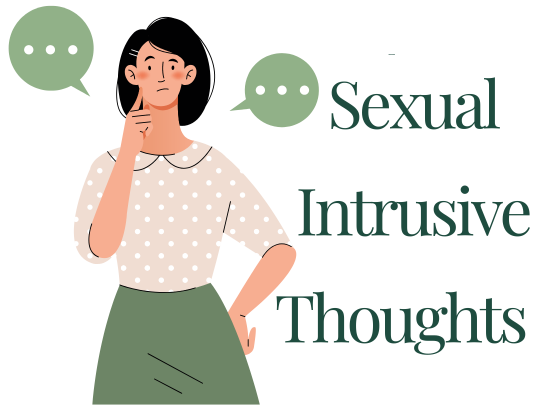
Obsessions involving sexual orientation, sexual intrusive thoughts, or other taboo themes can feel especially frightening and isolating, often because clients fear the thoughts reveal something true about their identity or character. I-CBT helps clients see how these obsessions are constructed through the same reasoning errors present in other OCD themes, an imagined possibility being treated as more real than actual lived experience and values, which can bring significant relief for a theme that often carries intense shame.
I-CBT Alongside ERP
For many clients, I-CBT and ERP work best in combination rather than as an either-or choice. ERP builds the behavioral skill of resisting compulsions and tolerating uncertainty through direct practice; I-CBT builds the reasoning skill of recognizing when OCD has pulled you into an imagined narrative in the first place. Clients who've plateaued with ERP alone often find that adding I-CBT reaches a layer of the disorder that pure exposure work was missing.
What to Expect From I-CBT Sessions at Still Minds Psychology
I-CBT sessions look somewhat different from typical exposure-based therapy. Early sessions focus on mapping your specific obsessional story, tracing exactly how a doubt builds from an initial trigger into a fully formed, convincing narrative. From there, we work together to identify the reasoning errors embedded in that story, including the tendency to trust imagined possibilities over direct, sensory reality. Rather than confronting feared outcomes head-on, treatment focuses on strengthening your trust in your own senses, memory, and immediate reality, and recognizing the specific moment where reasoning shifts away from the here-and-now and into hypothetical, story-driven thinking. Many clients describe this process as feeling less like "fighting" OCD and more like learning to catch it in the act.
Frequently Asked Questions About I-CBT Therapy
What does I-CBT stand for?
I-CBT stands for Inference-Based Cognitive Behavioral Therapy, a specialized OCD treatment that targets the reasoning process behind obsessions rather than focusing primarily on exposure.
How is I-CBT different from ERP?
ERP focuses on gradually facing feared situations while resisting compulsions, building tolerance for anxiety and uncertainty through direct practice. I-CBT focuses on the reasoning process that generates the obsession in the first place, helping clients recognize when they've shifted from trusting reality to trusting an imagined possibility. The two approaches are often combined.
Is I-CBT better than ERP for Pure O OCD?
Neither approach is universally "better"; they target different aspects of OCD. I-CBT is often especially helpful for Pure O because it doesn't require a clear external ritual to build exposures around, targeting the internal reasoning process directly instead. Many clients benefit from a combination of both approaches.
Does I-CBT work for OCD themes involving intrusive thoughts about harm or taboo topics?
Yes. I-CBT is often particularly well suited to these themes, since it addresses the underlying reasoning distortion that makes an unwanted thought feel dangerous or meaningful, without requiring clients to repeatedly confront the content of the thought itself in the way exposure-based approaches might.
How long does I-CBT treatment take?
This varies based on the complexity of the OCD theme and individual response to treatment, but many clients notice a shift in how convincing their obsessional doubts feel within the first several weeks, with continued progress over the following months.
Can I-CBT be combined with medication?
Yes. I-CBT, like ERP and other OCD treatments, can be used alongside medication management. Our clinicians are glad to coordinate with a prescriber when medication is part of your treatment plan.
Start I-CBT Therapy in Florida, Texas, Vermont, South Carolina, or Idaho
Still Minds Psychology offers Inference-Based CBT in person in Fort Lauderdale, FL, and via telehealth throughout Florida, Texas, Vermont, South Carolina, and Idaho. If OCD has convinced you to trust doubt over your own reality, I-CBT can help you build that trust back.

Welcome
Are you feeling stuck in your head, constantly spiraling from one thought to the next? Anxiety can leave you feeling alone, overwhelmed, and trapped. Reach out today, and stop letting anxiety make your life smaller.
Hi I’m Meghan. As an anxiety specialist, I people overcome fear, not just cope with it, with some noticing a reduction in weeks. I take an action based approach to help you face your fears and overcome them, allowing you to live the life you want. A full recovery from anxiety is very possible, and I've helped many finally feel as though they are in control of their mind.
I understand the way anxious thoughts can leave you feeling trapped. I struggled with severe anxiety and panic for several years before I was able to get help, and start actually living my life. I know therapy can help, and now I’m passionate about helping others.
I specialize in treating all forms of anxiety, from OCD (all subtypes & Pure-O), to social anxiety, panic disorder, health anxiety, phobias (agoraphobia, emetophobia, ect.), trauma (PTSD, religious trauma, childhood trauma), ARFID, gender/identity exploration, ADHD, BFRB’s (excoriation, hair pulling), hoarding, tics and Tourettes, and more.
If you’ve tried more traditional talk therapy and didn’t get the results, I'll work with you step by step & at your pace. I know finding help can be intimidating. Fear and stigma stops many of us from getting the help they need. Taking the first step scary, but I’ll work with at at your pace. Reach out to book and take the first step today.




as seen on psychology today & the International OCD Foundation
5 Stars on Zocdoc & Google


Still Minds Psychology: Anxiety & OCD Therapy
2901 W Cypress Creek Rd Suite 114, Fort Lauderdale, FL 33309
Check Out Our latest Blog Posts Here